Extream cold & hard Frost last Night which continued all this day, wind North – them 16 Went to Town, return’d to dinner, another Lamb last Night – Coldest day ths Winter.
From the journal of Captain Henry Thompson, February 4, 1814. Courtesy the Friends of Clifton.
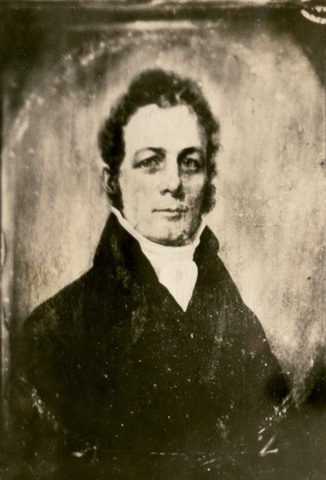
John George Jackson, WV Regional and History Collection
On February 4, 1814, John George Jackson arrived in Baltimore at the factory of Alexander McKim. A prominent Virginia politician, lawyer and land-owner, Jackson had recently started to develop a substantial industrial community near his home in Clarksburg, Virginia. As a keen observer of the growth and development of Baltimore and Pittsburgh, Jackson knew he could find support for his new venture in the city. At McKim’s factory, he hired skilled workers, including millwrights and blacksmiths, a joiner, saddler and other artisans. He also purchased heavy machinery for his new mill, iron furnace and tannery.
Business from men like Jackson helped Baltimore’s industrial economy expand in the early 1800s. In 1814, Robert and Alexander McKim built a new iron-works, one of the first factories in the city driven by steam power, on French Street in Old Town. Just a few days after his arrival in Baltimore, Jackson received authorization from the Virginia state legislature to convert a former grist mill on Elk Creek into a cotton and woolen mill. Virginia also granted Jackson’s request to lay out a town for his workers known as “Mile’s End” near Clarksburg. In a letter to his wife Mary Sophia Meigs, Jackson anticipated the new factory and saltworks to bring, “a pretty smart revenue to me, or it would be idle to go on the way I do.”
Source: Voice of the New West: John G. Jackson, His Life and Times, Stephen W. Brown, p. 120.
Fine clear day, went to Town return’d to dinner. Therm 18
From the journal of Captain Henry Thompson, February 3, 1814. Courtesy the Friends of Clifton.
2nd Light rain & mild this morning, but clear’d up at 12 O’Clock, with wind at N.W. Went to Town & aterwards Rode to Dine at Capt. Wederstrandts in company with Oliver H. Perry, the Commodore, and Capt. Chas. G. Ridgely, very pleasant ~
From the journal of Captain Henry Thompson, February 2, 1814. Courtesy the Friends of Clifton.
There is now among us a Gallant Hero, Commodore Perry! The public spirit of Baltimore seems to have awakened to the Beams of his Glory, and shone forth yesterday in a Dinner to him A Large Company, and an excellent repast, with splendid decorations for the occasion.
Letter from Lydia Hollingsworth to cousin Ruth Hollingsworth from Baltimore, February 2, 1814. Read more stories from Oliver Perry’s visit to Baltimore.
Source: Hollingsworth to Hollingsworth, 2 February 1814, Hollingsworth Letters, Ms. 1849, Maryland Historical Society. Published in “This Time of Present Alarm”: Baltimoreans Prepare for Invasion, Barbara K. Weeks, Maryland Historical Magazine, Volume 84, Fall 1989.
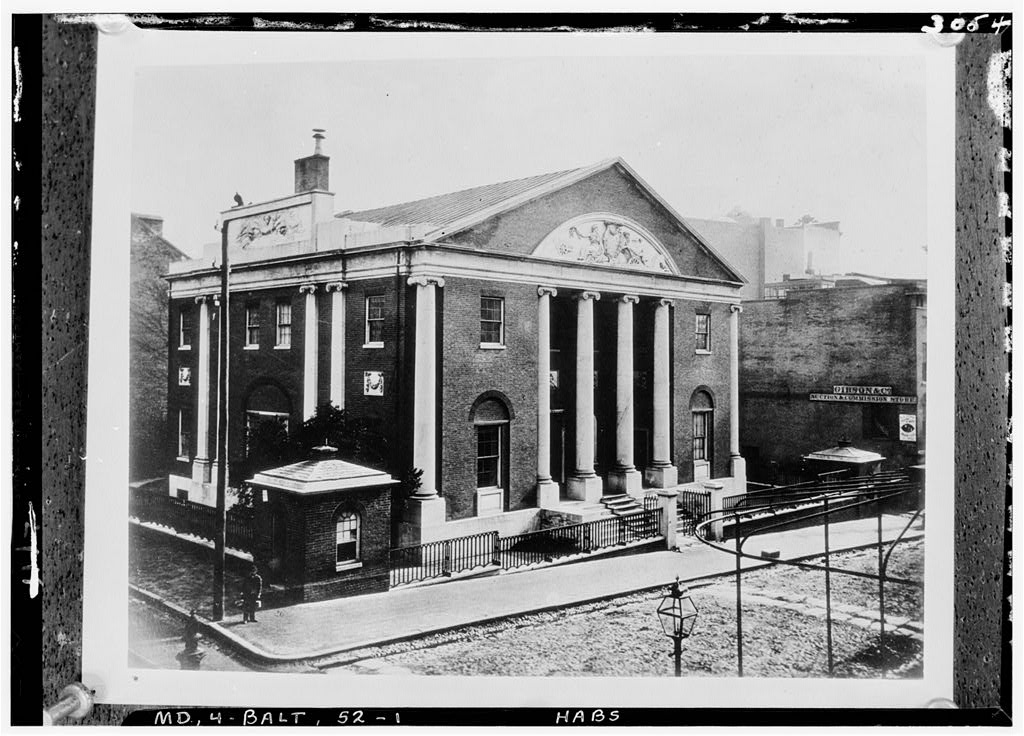
On February 2, 1814, in a letter to Reverend James Kemp, Nicholas Rogers offered up a novel metaphor for the National Union Bank (designed by Robert Cary Long at Charles and Fayette Streets) when he observed that the building was:
“wonderfully full of deformity, a sort of oyster in Architecture!”
Rev. Kemp, the recipient of Rogers’ letter and an associate rector of St. Paul’s Church, was working with Robert Cary Long on the construction of the new building for St. Paul’s Church on Charles Street.
Library of Congress, HABS MD,4-BALT,52–1
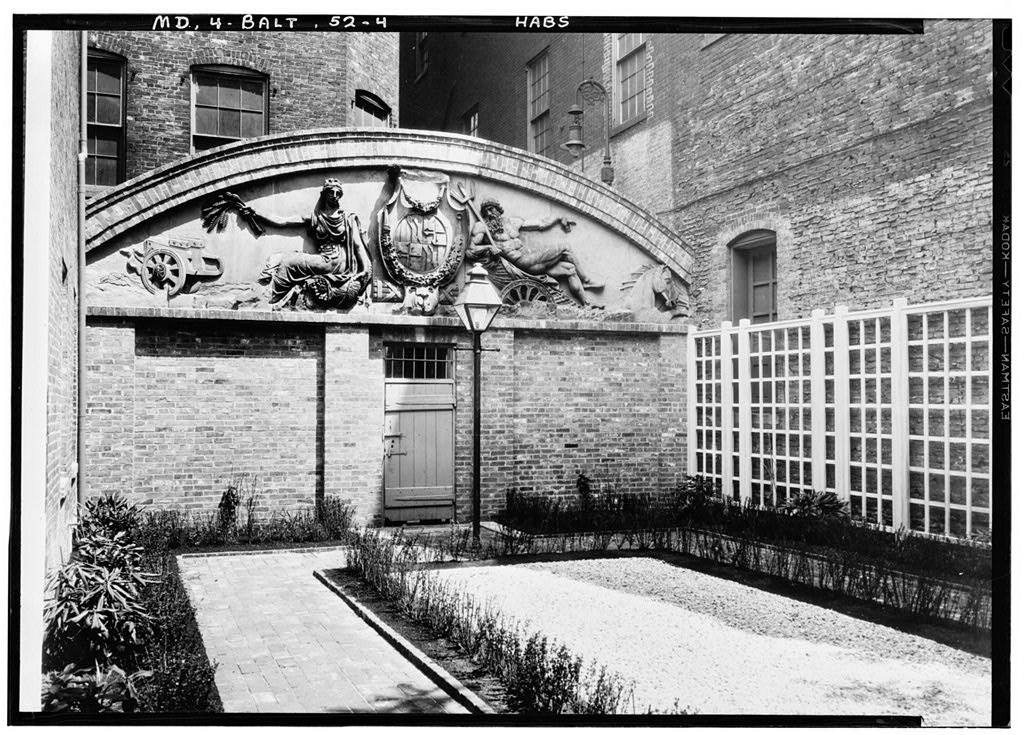
Organized and chartered in 1804, the Union Bank of Maryland was built in 1807 with architect Robert Cary Long joined by builders William Steuart and Colonel James Mosher. One artifact from the long-since demolished bank building still survives up through the present. A carved sandstone typanum, created by “Messrs. Chevalier Andrea and Franzoni,” was moved to the “Municipal Museum,” better known as the Peale Museum, where it was installed in the rear yard after the museum’s 1931 restoration.
E. H. Pickering, September 1936. Library of Congress, HABS MD,4-BALT,52–4
Source: Hayward, Mary Ellen, and Frank R Shivers. 2004. The Architecture of Baltimore: An Illustrated History. Baltimore: Johns Hopkins University Press.
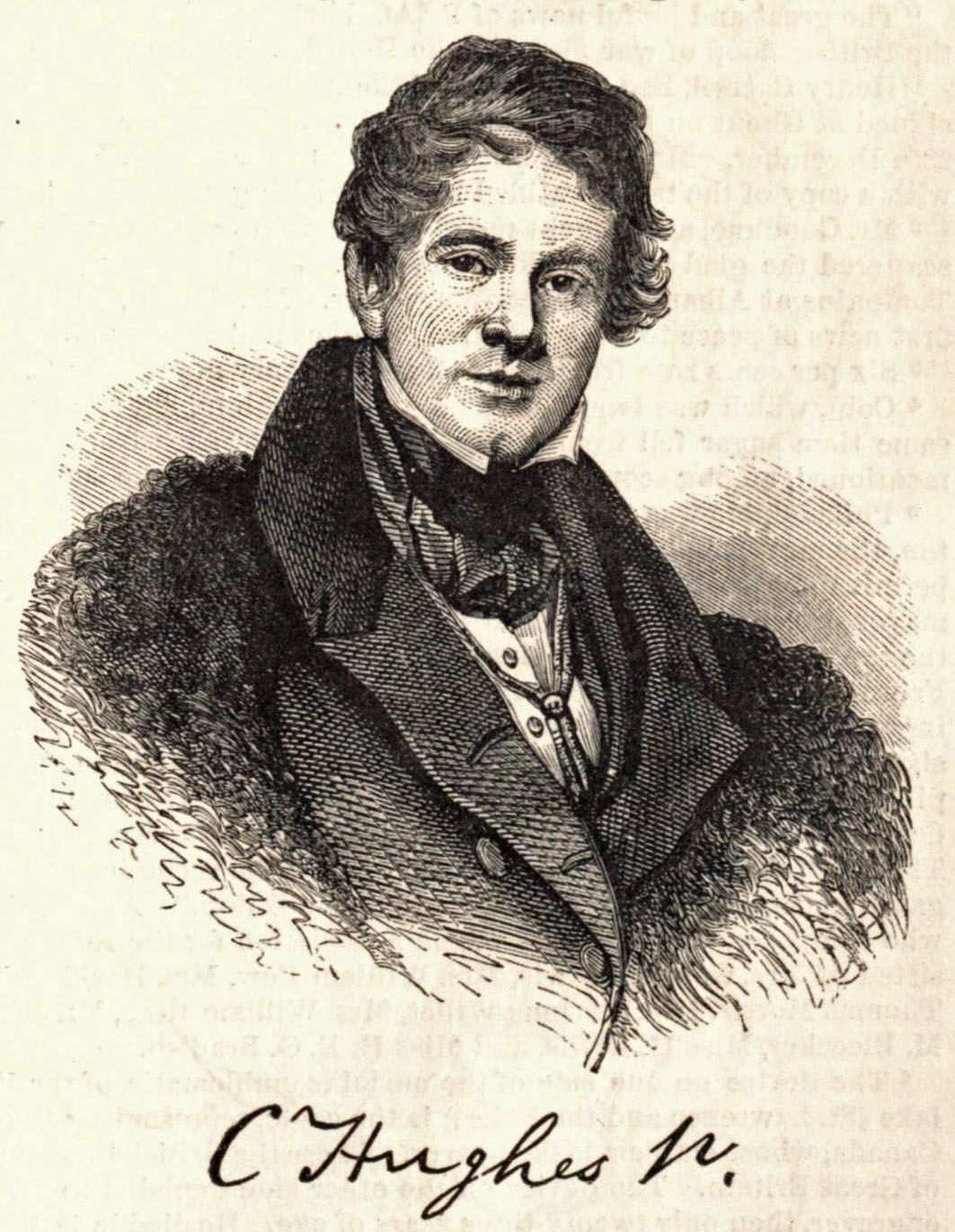
On February 2, 1814, President James Madison appointed Christopher Hughes, Jr. to serve as the “secretary of the joint mission for negotiating a treaty of peace and of commerce with Great Britian” at Ghent, Belguim. Born and raised in Baltimore, Hughes’ father was a well-known local silversmith.
Source: U.S. Secretary of State James Monroe to Hughes, February 2, 1814. Christopher Hughes Papers, Clements Library, University of Michigan.
Feby. 1st – Snow this morng. Wind South, turn’d to Rain at 12 O’Clock & continued all the afternoon – Went to Town & return’d home to dinner –
From the journal of Captain Henry Thompson, February 1, 1814. Courtesy the Friends of Clifton.
“31st – Very cold morning, hard Frosts – NW – Went to Town & din’d at Jas Steretts, afterward to the Circus, saw Com. Perry there.
From the journal of Captain Henry Thompson, January 31, 1814. Courtesy the Friends of Clifton.
On January 31, 1814, Commodore Oliver Hazard Perry, the celebrated “Hero of Lake Erie,” arrived in Baltimore from Washington, DC on his way to Newport, Rhode Island. Planning for a celebratory public dinner had been underway for weeks but on the first evening of Perry’s visit to the city, he decided to visit the circus. John Thomas Scharf paints the scene for the evening:
“That spacious building was incompetent to receive the mighty crowd that rushed to greet him. The house was crammed long before the entertainment began; and when the hero of Lake Erie entered, he was received with deep, loud and continued cheering.”
Source: Scharf, John Thomas. The Chronicles of Baltimore. Turnbull Bros., 1874. p.346.