Category Archives: Baltimore

Secretary William Jones: “The reiteration of your request to recruit in New York is superfluous”

On February 7, 1814, Secretary of the Navy William Jones sent a reply to Master Commandant Spence in Fell’s Point, firmly rejecting his request to recruit in New York to find sailors for the USS Ontario:
Robert T. Spence Esquire
Navy Department
U.S. Navy Baltimore.
February 7th. 1814
Sir
I have received your letter of yesterday. The reiteration of your request to recruit in New York is superfluous, you were explicitly informed, that it was inadmissible. The recruiting for the Lake service at New York will require all that can be obtained there. A surgeon will be ordered to the Ontario in a few days.—
I am respectfully your Obedt. Servant
William Jones

Trustees of the Baltimore City and County Almshouse ask overseer to “be more circumspect in his purchase of provision for the poor”

On February 5, 1814, the trustees of the Baltimore City and County Almshouse wrote to overseer John Morton, calling on him:

“to be more circumspect in his purchase of provision for the poor taking care not to have so large a proportion of bone in their meat, to have their bread attended to and well baked (particularly the indian) and to have vegetables mixed with their soup.”

While modest in some ways, the diet at the Baltimore City and County Almhouse offered greater variety and nutrition than many working people in Baltimore ate at home. Dinner included soup with an eight-ounce share of beef on Monday, Wednesday, Thursday and Saturday. Sunday inmates ate salt pork and vegetables, Tuesdays they ate mush and molasses and on Friday they ate herring with hominy or rice. Each inmate received a pound of bread daily along with a molasses-sweetened beverage of coffee and rye served for breakfast. 

During warmer months than January, the almhouse menu was supplemented by  produce from the almshouse farm. An 1825 harvest included cabbage, tomatoes, turnips, carrots, string beans, and onions. That same year, the almshouse cows gave 4,000 gallons of milk and cream enough for 1,735 pounds of butter.

Source: Scraping By: Wage Labor, Slavery, and Survival in Early Baltimore (2006), Seth Rockman, p.204.
Spencer H. Cone: “I was baptized in the Patapsco… the ice having been cut for the purpose”

On Saturday morning, February 4th, 1814, I was baptized in the Patapsco, by Elder Lewis Richards, the ice having been cut for the purpose. It was more than a foot thick, and the spectators, with many of my old companions among them, stood on the ice within a few yards of where I was buried, and went away saying, ‘He is mad ; he’ll not stick to that long.’

A native of Princeton, New Jersey, Spencer Houghton Cone moved from Philadelphia to Baltimore in 1812. He left behind a successful career as a actor and found work as the treasurer and bookkeeper for the Baltimore American newspaper and soon, together with his brother-in-law John Norvell, decided to purchase the Baltimore Whig.

In November 1813, after months of religious reflection, Cone found a copy of the Works of John Newton at a local book auction. Inspired by John Newton (a former slave ship captain who composed the hymn Amazing Grace), Cone began to hear voices and pray intensely. One night in early February, he paced back and forth in his attic until finally he had a vision for his own salvation:

I felt as if plunged into a bath of blood divine — I was cleansed from head to foot — guilt and the apprehension of punishment were both put away ; tears of gratitude gushed from my eyes in copious streams.

Just a few days later, Spencer Cone joined the First Baptist Church and, undeterred by the cold weather, insisted on being baptized immediately in the frozen Patapsco River.

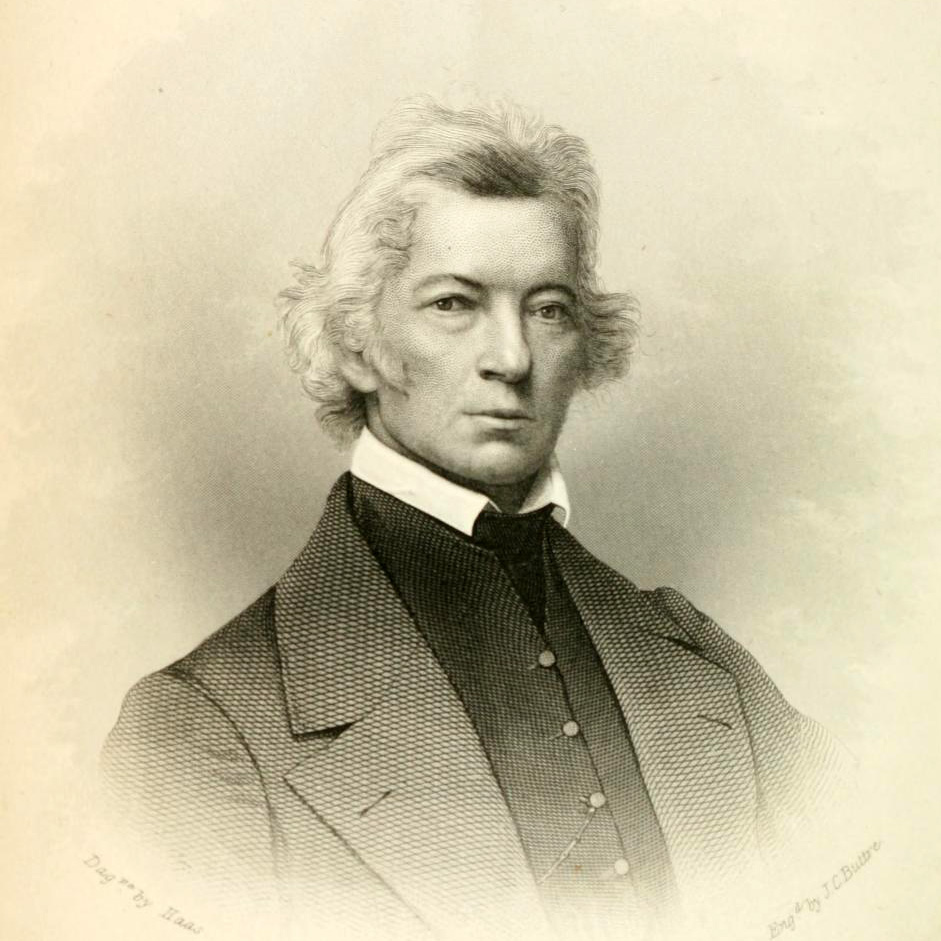
Spencer H. Cone
The life of Spencer H. Cone (1857)